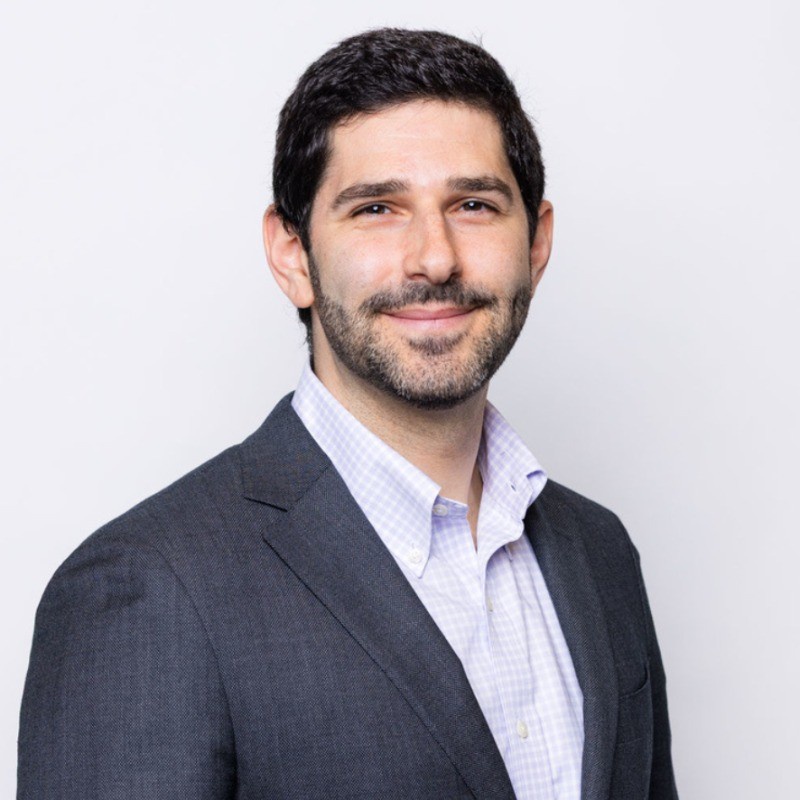







About Me
Dr. Weintraub's approach emphasizes collaboration and tailored treatment plans, ensuring patients receive the best possible care suited to their unique needs. He specializes in managing patients with a wide range of endocrine conditions, including obesity, diabetes, osteoporosis, and disorders of the thyroid, adrenal, and pituitary.
His particular interest lies in obesity medicine, a dynamic field that offers increasingly effective tools for treating and preventing weight gain, which is often the root cause of many chronic diseases. By working closely with nutritionists, surgeons, and other specialists, he strives to deliver holistic and effective care.
In addition to caring for patients, Dr. Weintraub is passionate about academic medicine, research, and training the next generation of physicians. He co-chairs the pharmacologic management of obesity guideline update through the Endocrine Society, is a former exam question writer for the American Board of Obesity Medicine, and develops the clinical congress portion of the American Association of Clinical Endocrinology Annual Meeting. He is actively involved in clinical research within endocrinology and obesity medicine.
Academic & Professional Contributions

NEJM Course Faculty Director
Faculty Director for the New England Journal of Medicine Group's "Advancing Obesity Care" course, collaborating with leading experts to deliver evidence-based approaches for obesity management and GLP-1 therapies.
Learn More
Endocrine Society Guidelines Co-Chair
Co-Chair of the pharmacologic management of obesity guideline update through the Endocrine Society, leading the development of evidence-based recommendations for obesity pharmacotherapy.
Learn More
AACE Obesity National Meeting Leader
Develops the clinical congress portion of the American Association of Clinical Endocrinology Annual Meeting, including selecting speakers and determining topics for general sessions, workshops, and satellite symposia.
Learn MoreEndocrine News Podcast
Featured expert discussing compounded obesity medications, addressing regulatory considerations, safety, efficacy, and patient access concerns in the evolving landscape of obesity pharmacotherapy.
Listen Now
DocWire News: EASO Framework Discussion
Expert commentary on how the European Association for the Study of Obesity framework reshapes clinical practice by moving beyond BMI to focus on individualized, health-centered approaches.
Watch VideoMedscape: GLP-1 Discontinuation Research
Discussing real-world data presented at ObesityWeek on weight regain patterns after GLP-1 discontinuation and implications for long-term obesity management strategies.
Read Article
ObesityWeek 2025
Presented real-world evidence on weight regain after GLP-1 discontinuation, highlighting the chronic nature of obesity and the importance of continuous treatment strategies.
View Details
2026 Columbia Cornell Obesity Medicine Course
Lecturer for the Columbia Cornell intensive CME program covering evidence-based approaches to obesity etiology, prevention, and treatment. Course emphasizes practical pharmacologic, nutritional, behavioral, and procedural interventions for patient-centered care.
Course InformationEndocrine Society Obesity Fellows Program Keynote
Keynote speaker every year since 2023 for the Endocrine Society’s Obesity Fellows Program, delivering the annual lecture on the state of obesity medicine. The 2026 program enrolled 221 fellows from 43 countries.
Learn MoreAvailable for CME courses, grand rounds, and media interviews.
Request Speaking EngagementEducation and Training
-
Fellowship — Endocrinology, Diabetes & Metabolism
Cornell NewYork-Presbyterian HospitalMemorial Sloan Kettering Cancer Center -
Residency — Internal Medicine
Thomas Jefferson University Hospital -
Medical School
Rutgers Robert Wood Johnson Medical School -
Undergraduate
University of PennsylvaniaThe Wharton School

Practice Location
NYU Langone Diabetes & Endocrine Associates
222 East 41st Street, 23rd Floor
New York, NY 10017
Select Publications
Defining disease or delaying care? A conceptual and clinical appraisal of the Lancet obesity framework
Five-year weight loss maintenance with obesity pharmacotherapy
GLP-1 Receptor Agonist Outcomes, Safety, and Body Mass Index Change in a National Cohort of Patients on Dialysis
GLP-1 Receptor Agonists in Kidney Transplant Recipients with Pre-Existing Diabetes: A Retrospective Cohort Study
Sodium-Glucose Cotransporter-2 Inhibitors for Hyperglycemia in Phosphoinositide 3-kinase Pathway Inhibition
Recent Commentary
I actively share research insights, clinical commentary, and updates on obesity medicine and GLP-1 therapies across professional platforms.
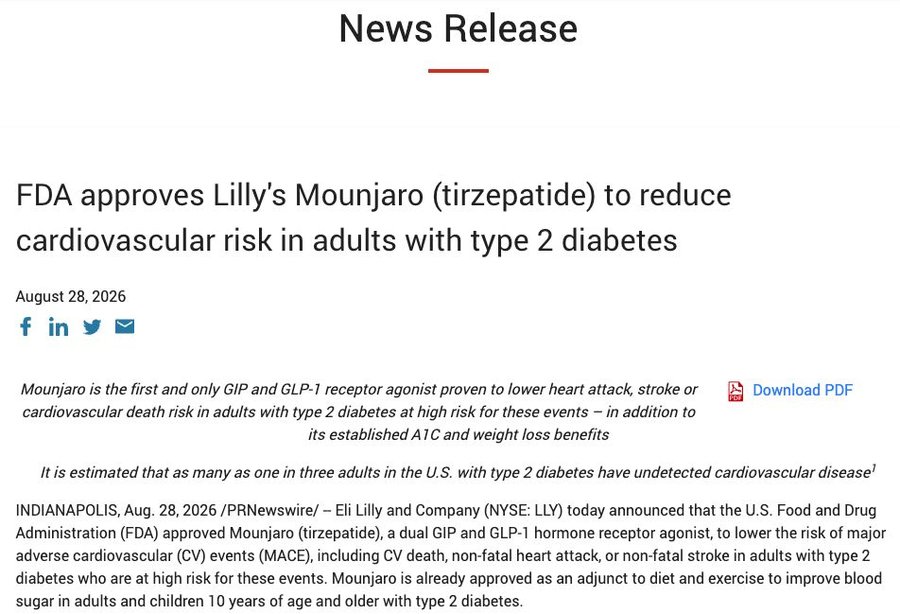
Tirzepatide Adds a Cardiovascular Indication
Today, the FDA adds an indication to Mounjaro's label. The FDA approved Mounjaro (tirzepatide) to "lower the risk of major adverse cardiovascular events, including cardiovascular death, non-fatal heart attack, or non-fatal stroke in adults with type 2 diabetes at high risk for these events." This doesn't expand the treatment population as Mounjaro is already approved for glycemic control in type 2 diabetes.
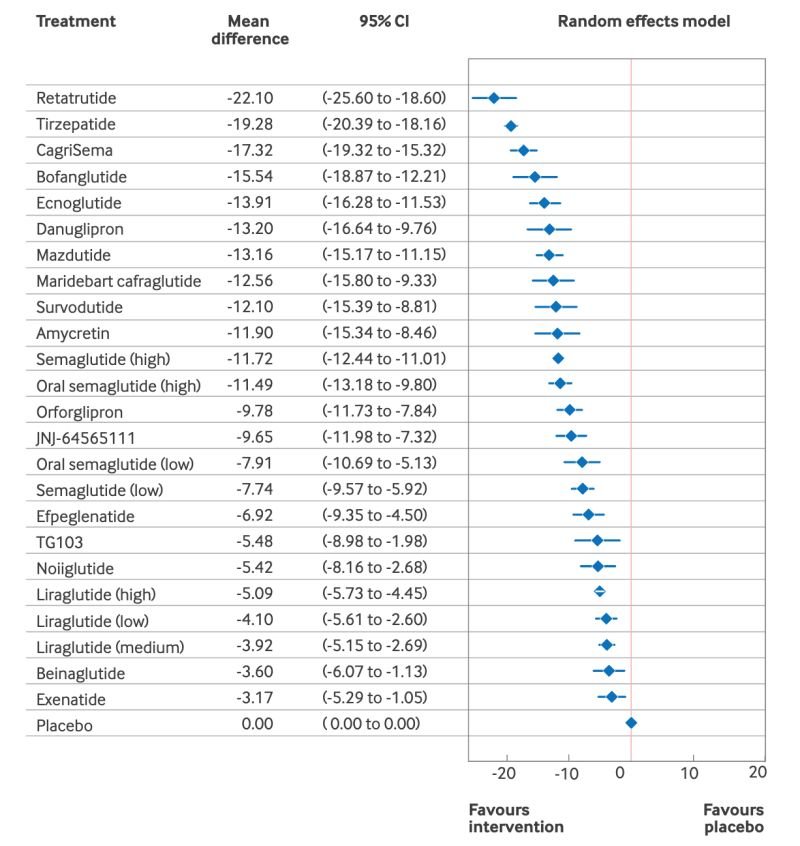
Ranking the GLP-1s Across 58 Trials
Today, a network meta-analysis in BMJ Medicine pooled 58 randomized trials and 24,214 adults with overweight or obesity (without diabetes), comparing GLP-1 based drugs for weight loss.
Top-line placebo-adjusted weight loss:
Retatrutide: 22.10% (95% CI -25.60 to -18.60)
Tirzepatide: 19.28% (-20.39 to -18.16)
CagriSema: 17.32% (-19.32 to -15.32)
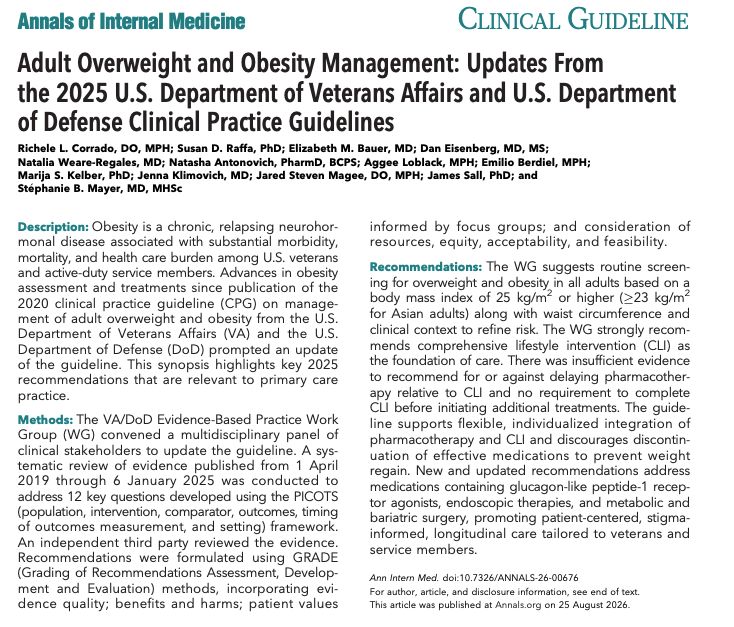
Inside the New VA/DoD Obesity Guideline
The 2025 VA/Department of Defense Clinical Practice Guideline on Adult Overweight and Obesity Management has been published in Annals of Internal Medicine. The first major update since 2020 and reflects a lot of changes in the field. 23 clinical recommendations total: 8 new, 4 reviewed and replaced, 7 amended, 4 unchanged. Key updates across screening, behavioral interventions, pharmacotherapy, and procedures.
Mazdutide's First US Trial
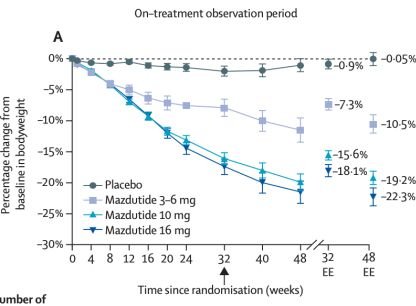
Phase 2 data for mazdutide, a once-weekly GLP-1/glucagon receptor dual agonist, in adults with obesity or overweight without T2D (N=179). This is the first US-based trial where previous studies including phase 3 were conducted in China. 22.3% weight loss at 48 weeks with those who adhered to the highest dose. However the in-trial group (intention-to-treat) had 16.3% weight reduction- the main difference due to the high discontinuation rate owing to GI side effects.
Follow for Regular Updates
Join me for regular insights on obesity medicine, GLP-1 research, and endocrinology